Mark Slater — Film & Television Composer
Background & career
Composer for film, television and immersive media, including fulldome, planetarium and experiential formats. The orchestra comes first. Electronic and popular colours come in when a project calls for them.
Early years
I started on the cello at five. At eight I won a music scholarship to Christ Church Cathedral, Oxford, and sang there as a chorister for five years, three hours a day. That’s also where I first tried composing. A music scholarship to Oakham School followed, and I played piano and cello to concerto standard before choosing composition over performing.
Finding a way into film music
Music ran alongside everything else. I studied law, and I was working shifts in supported housing before I’d finished the degree. In the evenings, in a shared house in Ealing, I taught myself to orchestrate with a computer, a Cakewalk sequencer and an Emu Proteus/2XR module. I transcribed Rimsky-Korsakov, Brahms, Wagner and Cliff Eidelman to see how each of them wrote for every section.
In 1997 I took a place on the Master’s in Composition for Film and TV at the London College of Music, based at Ealing Studios, studying with Rodney Newton and Nick Ingman, with Martin Ellerby as mentor. That same year I relearned the piano well enough to play Rachmaninov’s Rhapsody on a Theme of Paganini with my father’s orchestra.
First scores
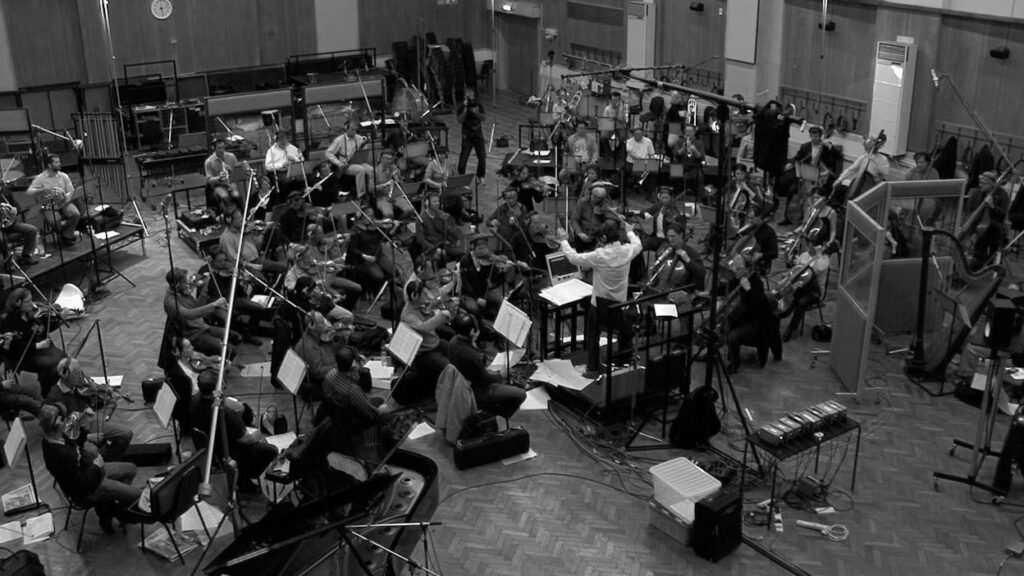
My first feature was an animated adaptation of Edwin Abbott’s Flatland (2006). The next year Tribal DDB in New York asked me to score Seduction by Light, the interactive launch campaign for the Philips Aurea. That gave me my first session at Abbey Road. In 2008 I scored 400 Years of the Telescope for PBS and the International Year of Astronomy, recorded with the London Symphony Orchestra at Abbey Road. That film led me into fulldome, planetarium and other immersive formats.
Orchestras and studios
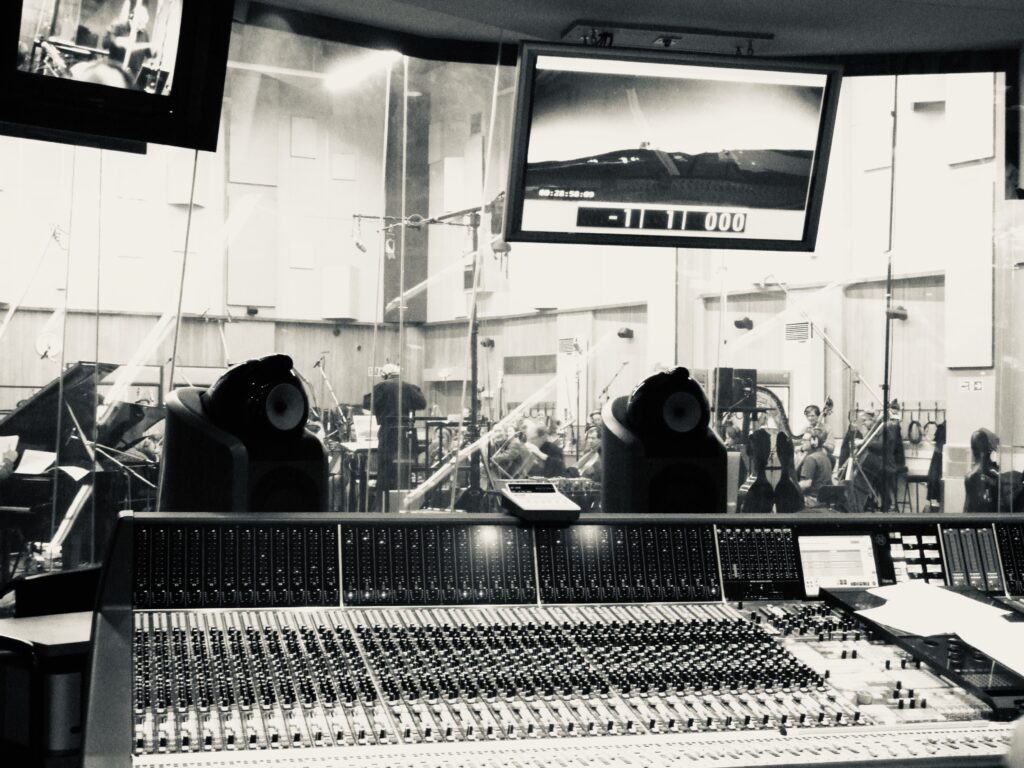
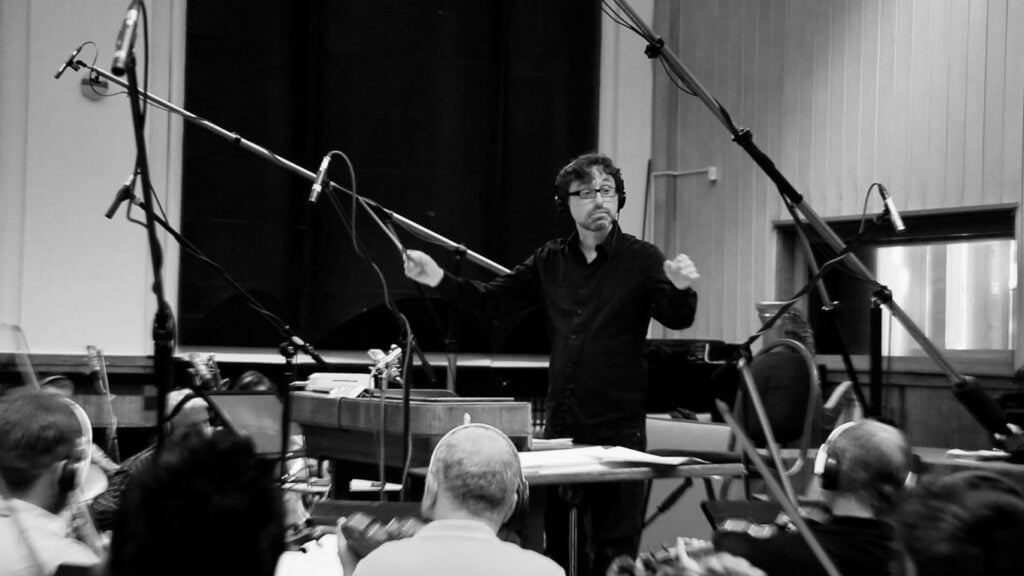
I’ve recorded scores with the London Symphony Orchestra, which I conducted at Abbey Road, the Budapest Film Orchestra, the City of Prague Philharmonic Orchestra and the Prague Metropolitan Orchestra. I’ve also run scratch sessions with session players in Los Angeles. At Abbey Road I worked with engineer Andrew Dudman. Jan Holzner recorded and mixed Dinosaurs at Dusk at Smecky Music Studios in Prague. The Budapest sessions were at the Hungarian Radio studios, and Gerry O’Riordan mixed at Kore Studios in London.
Where the music is heard
Fulldome films travel. Two Small Pieces of Glass, the companion show to 400 Years of the Telescope, was the most widely programmed planetarium show in the world for three years running, according to Loch Ness Productions’ annual State of the Dome survey. Natural Selection and Dinosaurs at Dusk have played to audiences in major cities across North and South America, Europe and Asia, including India, China and Japan. Life Under the Arctic Sky even screens on cruise ships that have their own dome theatres.
Recognition
Selected awards.
| Year | Award | Project |
|---|---|---|
| 2008 | Best Music | Seduction by Light |
| 2009 | Telly Award | 400 Years of the Telescope |
| 2012 | Best Audio | Natural Selection |
| 2018 | Best Score | Saved by Grace |
Music is a potent art form. It has the power to evoke feelings and emotions like nothing else. Mark Slater has harnessed this power and used it masterfully in the service of storytelling. — Robin Sip, Mirage3D
I’ve written more about the craft — and why I think film music is an art in its own right — in Film Music as an Art in Its Own Right.


Selected scores
Listen
A short reel of the film & TV work.
Clients