
Why immersive needs a slower cut.
I once wrote music for a set of 360 films that were recut before release. The decision, as I understand it, was made watching the footage flat on a screen rather than in a headset. That detail is the whole story.
Watch 360 material on a monitor and you are looking at one framing of it — the one the reviewer happens to be pointed at. It feels slow. The instinct is to tighten, to cut faster, to inject the energy that seems to be missing.
Put the same footage in a headset and the opposite is true. You are choosing where to look, and there is far more to see than any single frame contains. You need time to turn your head. A cut that felt sluggish on a screen arrives too early in the headset, and a sequence that felt urgent flat becomes unwatchable — you are yanked away from something you had only started to notice.
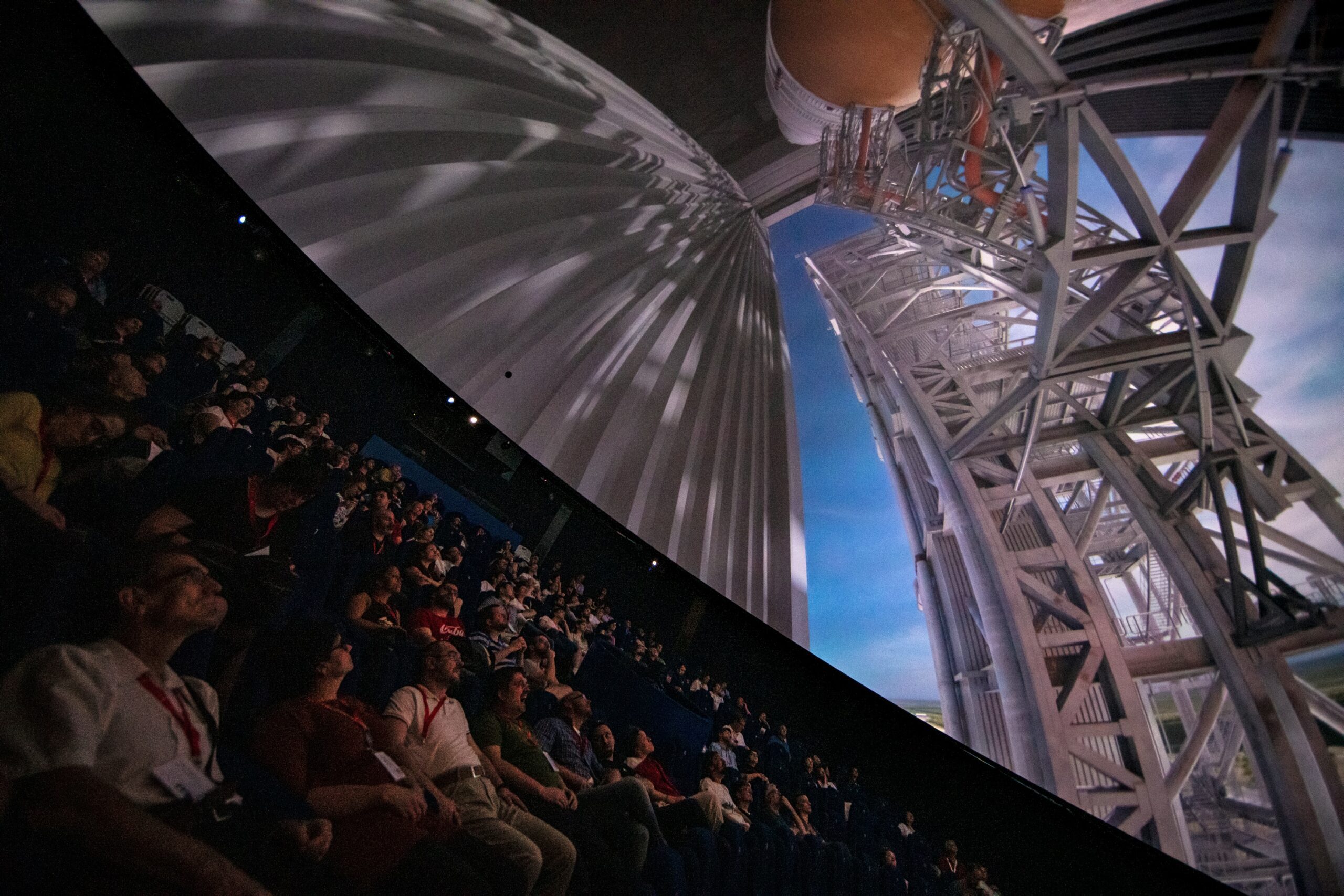
I’ve made the same misjudgement myself, with fulldome as well as VR. Reviewing either on a flat screen misleads you about tempo, every time. Frenetic cutting isn’t what creates excitement in immersive. The environment is already doing that work.
The same thing happens to the music, and it took me longer to understand.
Scoring to picture assumes a picture — a frame, a cut, a pace you’re writing against. In immersive there isn’t one. You’re not scoring the visuals; you’re scoring the environment, the dome or the simulation of putting your head somewhere other than the room you’re standing in.
So the decisions have to come from somewhere else. Not the rhythm of the edit, but an agreement reached beforehand about what the music is there to carry emotionally — because the picture will not tell you.
What surprised me is how much latitude that leaves. An immersive piece will take a great deal of music, or almost none, and both can be right. It’s the pacing in between that punishes you.