
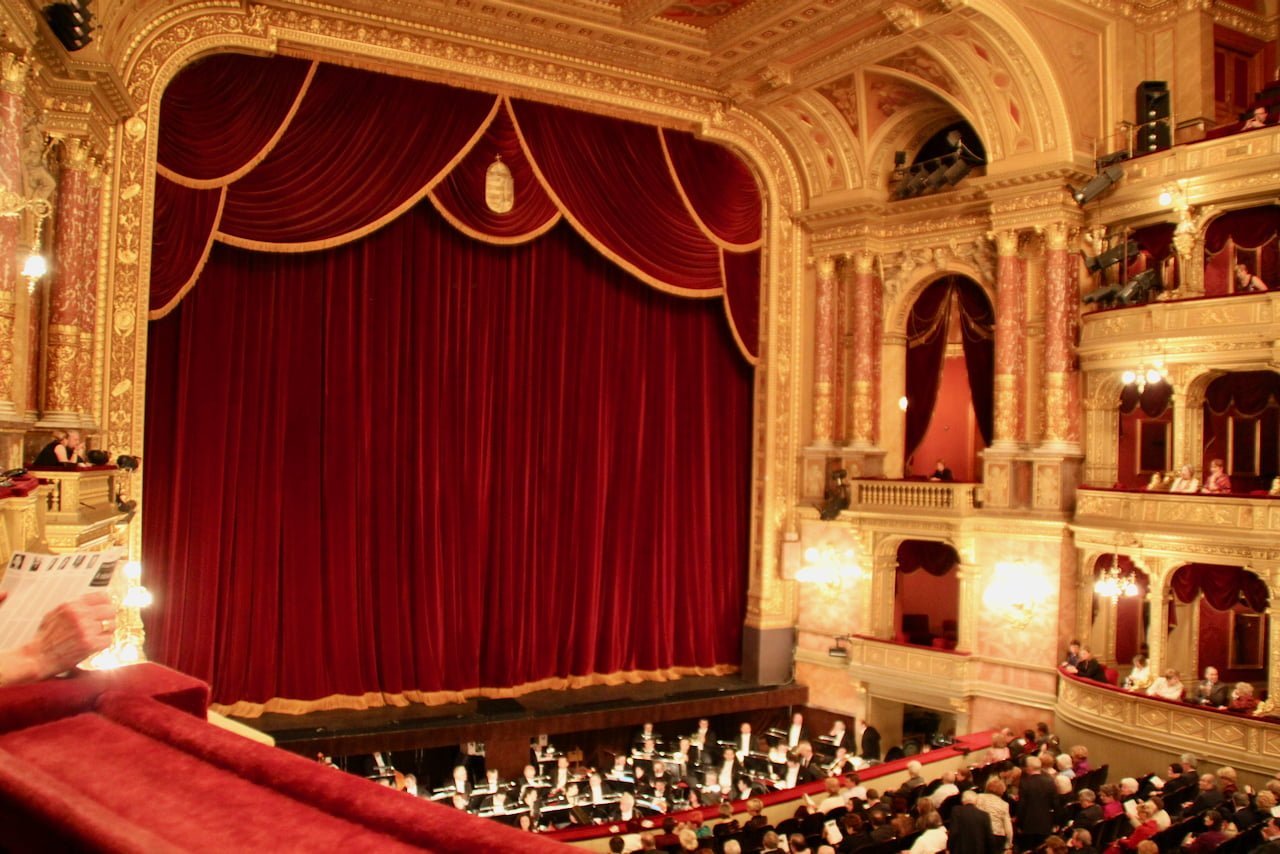
My first experience of opera was compulsory—and remote.
As a boarder at Christ Church Cathedral School, I was taken to see The Marriage of Figaro at the New Theatre Oxford. The stage and the music seemed very far away. I am sure we were in the cheap seats.
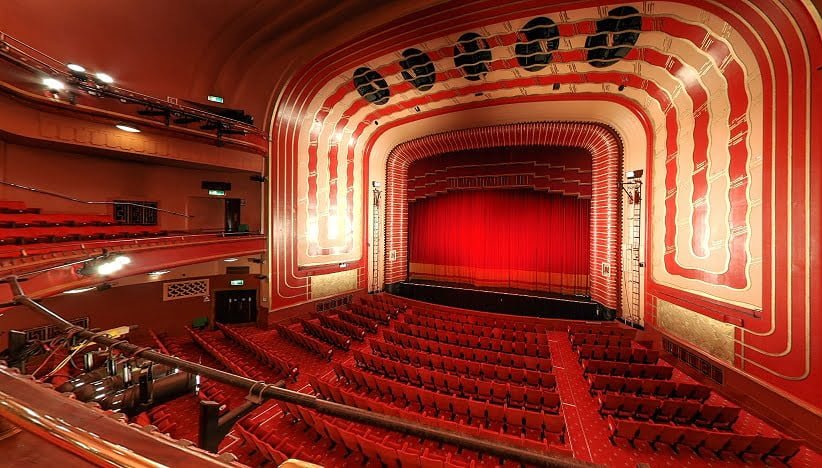
We had read through the plot, but its human dynamics—and the sexual politics and social provocation behind the story—were completely lost on us. That may never have been explained. I am fairly sure it was not.
Opera remained something other people understood.
What changed
Years later, I saw a semi-staged production of Michael Tippett’s King Priam. Its retelling of the Trojan War was harsher than the Mozart I remembered, and the war cry of Achilles—an unconventional, almost physical use of the voice—caught my imagination.
Tippett was not entirely unfamiliar. As a chorister at Christ Church Cathedral, I had sung his setting of the Magnificat and Nunc Dimittis, usually known as the St John’s Service. But King Priam revealed another Tippett to me.
A production of Don Giovanni transformed my view of Mozart some years later. It made full use of the darkness in the story: seduction, violence, abuse of power and, finally, damnation. This was not the distant, decorous Mozart I thought I remembered from school. The music and drama belonged to each other, and the production allowed me to see both.
I began seeking out Verdi, Puccini and Wagner with new ears—and with a new attentiveness to the inner worlds of their characters, exposed through the libretto and the music together.
Wagner became a particular passion. His world connected naturally with things I already loved: fantasy fiction, Greek and Norse mythology, and Dungeons & Dragons. Opera was no longer a remote theatrical convention. It had become another entrance into imaginative worlds I already knew how to inhabit.
Not enjoying your first opera does not mean opera is not for you.
It may mean you encountered the wrong work, in the wrong circumstances, without knowing what sort of attention it was asking from you.
Know the story
Knowing the plot rarely spoils an opera. It gives you something to anticipate.
Read a synopsis before you go. You do not need to study every character or remember every turn in the story. You need enough of a map to recognise where you are.
This matters even when surtitles translate the words above the stage. Opera often slows external action while a character examines one feeling from several directions. That can appear static if you are waiting for the plot to move. If you understand the situation, the music reveals what the synopsis cannot: hesitation, fear, desire, self-deception or a thought changing as it is sung.
That was what I had missed in Figaro.
Listen to one or two landmarks
Before attending, listen to a few moments from the opera—not necessarily all of it.
A familiar aria, overture or orchestral passage gives your ear something to recognise. The anticipation of a moment can become part of the pleasure. You hear how the conductor approaches it, how the singer inhabits it and how it works inside the drama rather than as an isolated recording.
Familiarity changes attention.
Where you sit matters
In autumn 1996, during the Royal Opera House’s final season before it closed for refurbishment, I attended one of three complete Ring cycles directed by Richard Jones and conducted by Bernard Haitink.
It was a modern, psychologically charged production. Jones treated the gods less as remote mythological figures than as a dysfunctional family, using surreal images—including the famously inflatable Rhinemaidens—to expose the desires, fears and damaged relationships beneath Wagner’s mythology.
The stalls seats had been removed and places were offered at much more affordable prices. I took a girlfriend who had never experienced opera before.
Her introduction was Wagner’s complete Ring: roughly sixteen hours of opera spread across four evenings.
It was not the cautious route.
I was delighted to convert her to its wonders. The production mattered, but so did our proximity to it. We were close to the orchestra, the stage and the singers. The music was no longer happening at the far end of an auditorium. The sound had physical weight, while the production gave the mythology a recognisably human inner life.
I am certain that both were essential to her first encounter.
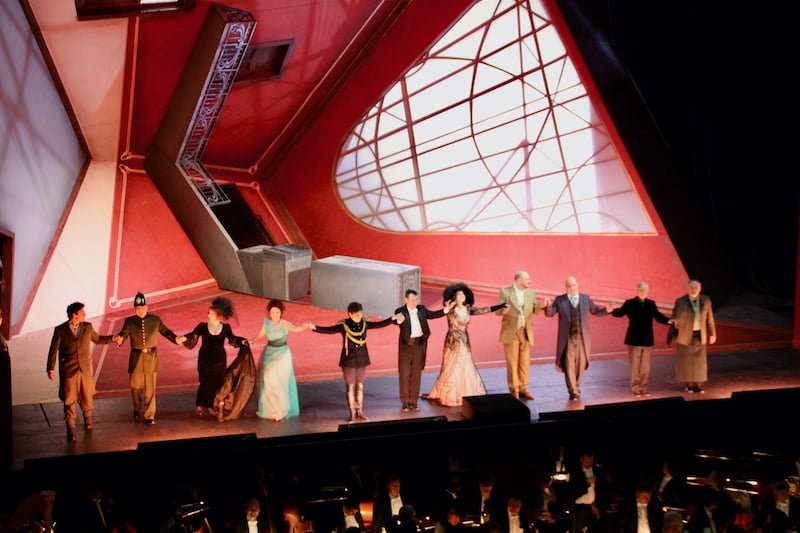
A more expensive seat is not always better, and cheap seats do not necessarily mean a poor experience. Check the theatre’s seating plan. Look for restrictions affecting the stage, the surtitles or both. If you can, ask the box office for advice.
Traditional opera singers generally project over the orchestra without personal microphones. Distance, the acoustics of the building and the position of the orchestra can all change what reaches you.
Where you encounter opera can become part of what you think it is.
The rules are less forbidding than they appear
Opera companies have become better at explaining what a first-time audience member can expect. The English National Opera, for example, now publishes practical guidance about tickets, surtitles, restricted views and what to wear.
That information matters. Much of what can make opera seem forbidding is not the music itself, but the feeling that everyone else knows rules you have never been told.
You do not normally need to dress up. You may choose to because it makes the evening feel special. Wear what makes you comfortable and check the particular venue if you are uncertain.
Long operas have intervals. Food and drink arrangements vary. Some productions are sung in their original language; the ENO generally performs in English. Most major houses provide surtitles, but it is worth checking before booking—and making sure your seat allows you to see them.
You are also allowed not to understand everything.
I have met couples at the opera where one partner is enthralled and the other sleeps through most of it. That is fine, provided the sleeper does not snore. I cannot claim to have remained fully awake through every minute of Wagner myself.
What might an opera of mine sound like?
Since then, I have often wondered whether I might write an opera myself.
For a while, I imagined something drawn from science fiction—perhaps an adaptation of Alfred Bester’s The Demolished Man, before eventually writing a story of my own.
What would an opera like that sound like? How would music expose the inner world of characters in a society where thought itself is no longer private?
I still do not know.
But that question is a long way from the distant stage at the New Theatre Oxford.